

Cities are buzzing with life, but they’re also packed. Finding space for solar panels can be tricky. But hey, where there’s a will, there’s a way. Urban areas are now turning to some pretty cool ideas to get solar power going. From using skyscrapers to smart solar windows, cities are finding ways to make it work. It’s all about getting creative with the space and tech we’ve got. Let’s dive into how cities are tackling these challenges and making solar power a reality.
Key Takeaways
- Cities are using vertical spaces like rooftops and building facades to install solar panels.
- Innovative solar technologies like thin-film panels and smart windows are revolutionizing urban energy solutions.
- Shared solar projects and solar canopies are helping overcome space constraints in crowded areas.
- Eco-friendly materials and stylish designs are addressing environmental and aesthetic concerns.
- Urban infrastructure is increasingly integrating solar power, from public transport to energy-generating sidewalks.
Harnessing Vertical Spaces for Solar Energy
Rooftop Solar Installations
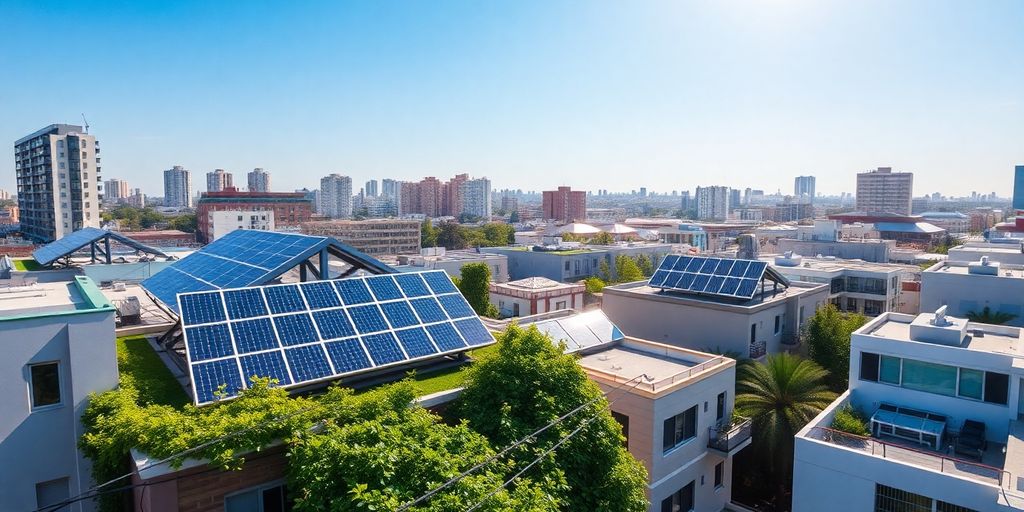
Rooftop solar installations are becoming increasingly popular in urban areas. These setups make use of the otherwise unused space atop buildings to generate renewable energy. By installing solar panels on rooftops, cities can reduce their dependency on traditional power sources and lower their carbon footprint. The challenge, however, is ensuring that these installations are efficient and cost-effective. Many cities are now offering incentives and subsidies to encourage more building owners to adopt rooftop solar solutions.
Solar Facades and Building-Integrated Photovoltaics
Incorporating solar panels into the very fabric of a building is a game-changer. Solar facades and building-integrated photovoltaics (BIPV) allow structures to produce energy without compromising their design. These systems can be seamlessly integrated into windows, walls, and other parts of a building, making them an attractive option for urban developers. The technology is advancing rapidly, offering more efficient and aesthetically pleasing solutions that blend with modern architectural designs.
Utilizing Skyscrapers for Solar Power
Skyscrapers, with their towering heights and vast surfaces, present a unique opportunity for solar energy capture. By installing panels on the sides of skyscrapers, cities can maximize their solar energy potential. This approach not only provides a significant amount of energy but also transforms skyscrapers into sustainable energy producers. However, it requires careful planning and design to ensure that the panels are optimally positioned and do not detract from the building’s appearance.
In urban settings, where space is at a premium, utilizing vertical spaces for solar energy is not just innovative but necessary. By turning buildings into energy producers, cities can move towards a more sustainable future, reducing their reliance on non-renewable energy sources.
Innovative Solar Technologies for Urban Areas
Thin-Film Solar Panels
Thin-film solar panels are a game changer for urban areas. These panels are lightweight and flexible, making them perfect for installation on a variety of surfaces, including curved and irregular ones. They use materials like cadmium telluride and copper indium gallium selenide, which allow them to be thinner than traditional silicon-based panels. This means they can be integrated into roofs, facades, and even windows without adding significant weight or bulk. While their efficiency is slightly lower than traditional panels, their versatility in urban settings makes them a popular choice.
Flexible and Transparent Solar Cells
Imagine a world where your windows and building facades generate electricity. Flexible and transparent solar cells are making this a reality. These cells can be applied to surfaces that were previously unsuitable for solar panels, such as glass windows. They’re not only flexible but also lightweight, allowing for easy integration into existing structures. This technology is particularly exciting for urban environments where space is limited, and every surface counts.
Smart Solar Windows
Smart solar windows are another innovative solution transforming urban energy landscapes. These windows not only let light in but also convert sunlight into electricity. They are designed to adjust their tint based on the intensity of sunlight, optimizing both energy generation and indoor temperature regulation. This dual functionality can significantly reduce a building’s energy consumption, making it more sustainable. As urban areas continue to grow, the adoption of smart solar windows could play a crucial role in reducing the carbon footprint of cities.
Urban environments are bustling with potential for solar energy innovations. As we continue to develop and implement these technologies, cities can become more sustainable and energy-efficient, turning every available surface into a green energy source. Innovative solar technologies like transparent solar panels and solar fabrics are set to transform energy applications, especially in urban settings and for portable energy solutions. These advancements promise to enhance the integration of solar energy into everyday life.
Overcoming Space Constraints in Cities
Urban areas are notorious for their lack of space, which poses a significant challenge for solar energy adoption. Finding creative ways to install solar panels is essential for maximizing energy production in these crowded environments.
Community Solar Projects
Community solar projects are a fantastic way to overcome space issues. These initiatives allow multiple households or businesses to share a single solar installation. Typically, these projects are set up in a central location, and participants receive credits on their electricity bills for the energy produced. This model is especially beneficial for renters or those who live in buildings unsuitable for solar panels. It fosters a sense of community and collective responsibility towards sustainable energy practices.
Shared Solar Gardens
Shared solar gardens operate similarly to community solar projects but often on a smaller scale. Residents can "subscribe" to a portion of the solar output, reducing their reliance on traditional energy sources. These gardens are usually located on unused plots of land, rooftops, or even parking lots. By utilizing otherwise wasted spaces, shared solar gardens make solar energy accessible to more people, contributing to sustainable urban living.
Solar Canopies in Public Spaces
Solar canopies are an innovative solution that turns public spaces into energy-generating areas. These structures can be installed over parking lots, parks, or even sidewalks. They provide shade and protection from the elements while generating electricity. Solar canopies not only make efficient use of space but also enhance the urban landscape.
Embracing these space-efficient solar solutions can significantly impact urban energy sustainability, making cities more livable and eco-friendly.
Addressing Environmental and Aesthetic Concerns
Eco-Friendly Solar Panel Materials
Solar panels are generally seen as a green energy source, but their production isn’t without environmental impacts. The industry is making strides to clean up its act by introducing eco-friendly solar panel materials. For instance, there’s a growing push to use recycled materials in solar panels, like recycled glass, which not only reduces waste but also lowers the carbon footprint of manufacturing. Some companies are even exploring ways to minimize the use of harmful chemicals during production.
Designing Aesthetically Pleasing Solar Installations
In urban settings, aesthetics can be a big deal. No one wants an eyesore on their rooftop or in their neighborhood. So, designers and architects are getting creative with solar installations, making them not just functional, but also visually appealing. From sleek, integrated designs that blend with building facades to innovative solar tiles that look like regular roofing, there’s a real effort to ensure that solar panels enhance rather than detract from the urban landscape.
Balancing Urban Green Spaces with Solar Needs
Cities are always trying to find the right balance between green spaces and development. Solar panels can sometimes feel like they’re competing with parks and trees for space. But they don’t have to. By thoughtfully integrating solar technology into urban planning, cities can maintain their green spaces while also expanding their solar capacity. This might include installing solar panels over parking lots or on the roofs of public buildings, places that are already developed and won’t disrupt existing green areas.
Striking a balance between functionality and beauty in solar installations is crucial for gaining public acceptance and maximizing the benefits of solar energy in urban areas.
Integrating Solar with Urban Infrastructure
Solar-Powered Public Transportation
Cities are buzzing with people and vehicles, making solar-powered public transportation a game-changer. Imagine buses and trains running on solar energy, cutting down emissions and saving costs. Solar panels on the roofs of buses or at stations can generate electricity to power these vehicles. It’s not just about reducing carbon footprints but also about smarter energy use. Plus, this tech can be paired with other renewable sources to keep things moving even when the sun’s not out.
Solar Lighting and Signage
Streetlights and signs can soak up the sun during the day and light up the night without tapping into the grid. Solar lighting is a simple yet effective way to brighten up urban areas sustainably. It’s perfect for parks, pathways, and even billboards. With solar, cities can save on energy bills and maintenance costs. The initial setup might be a bit pricey, but the long-term savings are worth it.
Energy-Generating Sidewalks
Walking on sunshine takes a new meaning with energy-generating sidewalks. These are pavements fitted with solar panels that convert sunlight into electricity. They can power nearby streetlights or feed energy back into the grid. It’s a smart way to make every step count toward a greener city. These sidewalks are durable and can withstand foot traffic, making them a practical solution for urban areas.
Integrating solar power into urban design helps cities address critical challenges and fosters the development of sustainable, resilient communities. Learn more about integrating solar power into urban design.
By weaving solar tech into the fabric of urban infrastructure, cities can not only meet their energy needs but also pave the way for a cleaner, more sustainable future.
Policy and Economic Incentives for Urban Solar Adoption
Government Subsidies and Tax Credits
Government incentives are a huge part of making solar energy more appealing in urban areas. Tax credits and rebates can significantly reduce the upfront costs of solar installations, making it more accessible for homeowners and businesses. For instance, New York City’s Solar Property Tax Abatement offers a substantial 30% tax reduction for those who install solar systems, which is a big deal in encouraging solar adoption.
Public-Private Partnerships
Public-private partnerships are another way to push solar projects forward. These collaborations can bring in the resources and expertise needed to implement large-scale solar projects in cities. By working together, governments and private companies can share risks and benefits, leading to more efficient and effective solar installations.
Innovative Financing Models
Innovative financing models are making it easier for people to go solar without breaking the bank. Things like solar leases, power purchase agreements (PPAs), and community solar subscriptions allow individuals to benefit from solar energy without the full cost of installation. These models are particularly useful in urban settings where space and resources might be limited.
The shift towards solar energy in urban areas is not just a technological change but a financial one too. With the right incentives and models, cities can lead the way in sustainable energy solutions.
Community Engagement and Education

Raising Awareness About Solar Benefits
Getting people excited about solar energy is a big deal. It starts with talking about the benefits. Solar power isn’t just about cutting electricity bills; it’s about cleaner air and a better future. People need to know how solar can make a difference in their lives and the environment.
- Host local events to showcase solar technology.
- Share success stories from other communities.
- Provide easy-to-understand materials about solar energy.
Workshops and Training Programs
Once folks see the benefits, they often want to know more. Workshops and training sessions are a great way to dive deeper. These programs can teach the basics of solar tech and even offer hands-on experience.
- Organize workshops in community centers or schools.
- Partner with local solar initiatives for expertise.
- Offer certification programs for those interested in solar careers.
Community education is about more than just information; it’s about inspiring action and building a network of solar advocates.
Collaborative Urban Solar Initiatives
Teamwork makes the dream work, right? Collaborative projects bring together residents, businesses, and local governments. By pooling resources and ideas, these initiatives can make a real impact.
- Set up community solar gardens where people can share the benefits.
- Encourage local businesses to sponsor solar projects.
- Create forums for discussing urban solar strategies.
Involving the community in solar projects not only spreads awareness but also builds a sense of ownership and pride in local sustainability efforts.
Future Trends in Urban Solar Solutions
Advancements in Energy Storage
In the world of solar energy, storage is like the unsung hero. Without solid storage solutions, all that sun power can go to waste once the sun dips below the horizon. Battery technology has been making leaps and bounds, with lithium-ion still leading the pack. But there’s a lot of buzz around solid-state batteries and even flow batteries, which promise longer life and more efficiency. Urban grids are seeing more of these advanced storage systems, which help keep the lights on when the sun isn’t shining.
AI and IoT in Solar Energy Management
AI and IoT are becoming the brains behind solar setups. These technologies help optimize energy use, predict maintenance needs, and even adjust panels for the best sun exposure. Imagine a city where solar panels talk to each other, sharing data to make sure energy is used where it’s needed most. This kind of smart management is not just a dream; it’s happening now, making urban solar systems more efficient and reliable.
Predictive Maintenance and Monitoring
Keeping solar panels in top shape is key to getting the most out of them. Predictive maintenance uses data to foresee when a panel might need a little TLC, so issues can be fixed before they become big problems. This approach saves money and downtime, ensuring solar panels are always ready to soak up the sun. With urban areas increasingly adopting solar energy as a primary power source, predictive maintenance is becoming a crucial part of the solar landscape.
As cities grow and evolve, so too do the technologies that power them. Solar energy is at the forefront of this change, offering cleaner, smarter solutions for urban environments. With advancements in storage, AI, and maintenance, the future of solar in cities looks bright.
Wrapping It Up: Solar Panels in the City
So, there you have it. Urban areas are tricky for solar panels, but not impossible. We’ve seen some cool ideas, like using rooftops and even integrating them with farming. It’s not just about slapping panels on every available surface. It’s about smart placement and using tech to make them work better in tight spaces. Sure, there are challenges, like figuring out how to recycle old panels and dealing with limited space, but the potential is huge. Cities can really benefit from solar power if we keep pushing for innovation. It’s all about finding the right balance and making the most of what we’ve got. Let’s keep the momentum going and see where it takes us.
Frequently Asked Questions
How do vertical spaces help in solar energy generation?
Vertical spaces like building facades and skyscrapers can be used to install solar panels, making the most of limited urban space.
What are thin-film solar panels?
Thin-film solar panels are a type of solar technology that is lightweight and flexible, making them ideal for urban environments.
How do community solar projects work?
Community solar projects allow multiple people to share the benefits of a single solar power installation, often located off-site.
Why is it important to use eco-friendly materials for solar panels?
Using eco-friendly materials helps reduce the environmental impact of solar panel production and disposal.
What are solar-powered public transportation systems?
Solar-powered public transportation systems use solar energy to power vehicles like buses and trains, reducing reliance on fossil fuels.
How can people learn more about solar energy?
People can attend workshops, training programs, and participate in community solar initiatives to learn more about solar energy.