

Ever wondered how many solar panels it takes to power a school? It’s not a one-size-fits-all answer. Schools have different energy needs based on size, location, and facilities. From lighting to computers, energy use can add up quickly. Solar panels can help cut costs and reduce carbon footprints, but figuring out how many you need involves a bit of math and consideration of various factors. Let’s break it down.
Key Takeaways
- Schools need to assess their annual energy usage to determine solar panel requirements.
- Geographic location affects how many panels are needed due to varying sunlight exposure.
- The type and efficiency of solar panels can impact the total number required.
- Available space for installation can limit or expand options for solar panel systems.
- Budget constraints and future energy needs should be considered when planning.
Understanding the Energy Needs of a School

Analyzing Annual Energy Consumption
How much energy does a school really use? That’s the first question you gotta ask when thinking about solar panels. Schools are like little cities; they have classrooms, gyms, libraries, and sometimes even swimming pools. Each of these spaces has its own energy needs. Generally, schools consume energy for lighting, heating, cooling, and powering up a ton of gadgets and appliances. To get a clear picture, you’ll need to look at the school’s annual energy bills. Checking these bills helps you figure out the total kilowatt-hours (kWh) used over a year, which is crucial for planning any solar setup.
Identifying Major Energy Consumers
So, what’s hogging all that energy? In most schools, lighting is the biggest culprit. Classrooms, hallways, and gyms need to be well-lit, and that adds up. Then there’s heating and cooling. Depending on where the school is located, keeping the temperature comfy can be a huge energy drain. Don’t forget about computers, projectors, and lab equipment. They might not seem like much individually, but put them all together, and they account for a good chunk of the energy use. Think about it like this: every piece of equipment is a small piece of the larger energy puzzle.
Impact of School Size and Facilities
The size of the school and what it offers can really change how much energy it needs. A small elementary school won’t need as much energy as a large high school with science labs and a sports complex. More students usually mean more classrooms and facilities, which in turn means more energy use. Plus, schools with special facilities like swimming pools or large auditoriums will naturally consume more energy. It’s like comparing a small family car to a big SUV; the bigger and more equipped it is, the more fuel—or in this case, energy—it needs.
Understanding a school’s energy needs is like piecing together a puzzle. Each part, from lighting to heating, plays a role in the bigger picture. Knowing these details not only helps in planning for solar panels but also in making the school more energy-efficient overall.
Factors Influencing Solar Panel Requirements
Geographic Location and Sunlight Availability
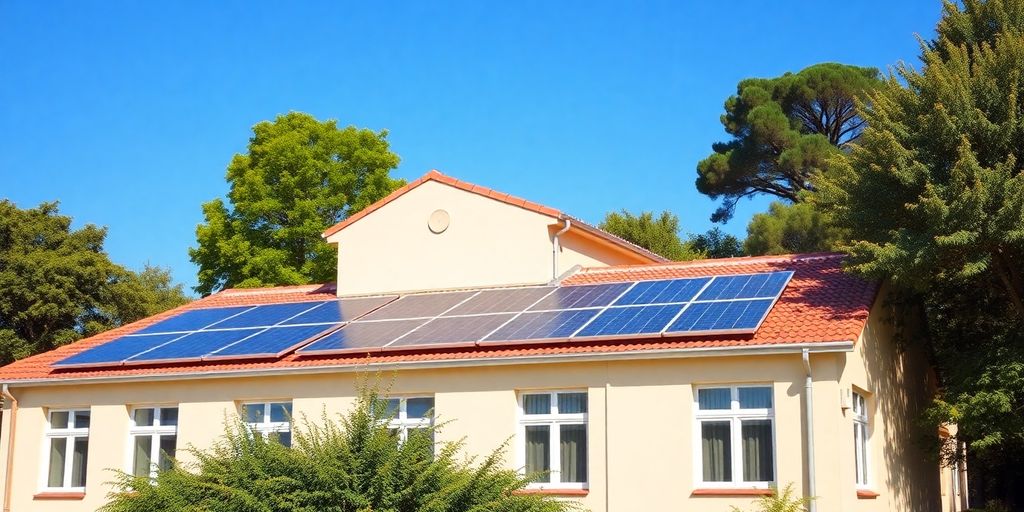
Where a school is located plays a huge role in how many solar panels it might need. Schools in sunny states like Arizona or California can usually get by with fewer panels because they get more sunlight. On the flip side, schools in places with more cloudy days, like Seattle, might need more panels to get the same amount of energy. The amount of sunlight your location receives directly impacts the efficiency of solar panels.
Efficiency and Type of Solar Panels
Not all solar panels are created equal. Some are more efficient than others, converting more sunlight into electricity. Monocrystalline panels, for example, are generally more efficient but can be pricier. If space is tight, you might opt for these more efficient panels to maximize energy production.
Available Installation Space
Space is another big factor. Schools with large rooftops or open land have more options for panel placement. But if a school is in a crowded urban area, they might have to get creative. They could install panels on smaller roof sections or even use vertical spaces. The amount of space available can limit the number of panels you can install, so it’s important to plan carefully.
When planning for solar panels, consider not just the immediate energy needs but also future growth. Schools may expand or add new facilities, which will increase energy consumption. Planning for scalable solar solutions can save time and money down the road.
Calculating the Number of Solar Panels Needed
Determining Energy Consumption
First things first, you need to get a grip on how much energy your school uses. Grab last year’s energy bills and calculate the average monthly and yearly consumption in kilowatt-hours (kWh). This gives you a baseline to work with. Schools with bigger campuses and more facilities, like science labs and gyms, generally need more energy.
Evaluating Sunlight Hours
Next, check out how much sunlight your area gets. This isn’t just about sunny days; it’s about the average sunlight hours per day. You can usually find this info from local weather stations or solar websites. More sunlight means fewer panels are needed to generate the same amount of energy.
Using Solar Panel Calculators
Now, it’s time to crunch some numbers. Use a solar panel calculator to figure out how many panels you need. Here’s a simple formula to get you started:
- Total kWh required per year divided by the product of Solar Panel Output per hour, Average Sunlight hours per day, and 365 days.
For example, if your school uses 100,000 kWh per year, and each panel produces 300 watts, with an average of 5 sunlight hours per day, you’d calculate it like this:
- Number of Panels = 100,000 ÷ (0.3 × 5 × 365) ≈ 183 panels
Keep in mind, it’s smart to plan for future growth. Schools might add new buildings or facilities, which would bump up energy needs. Better to have a few extra panels than not enough.
Benefits of Installing Solar Panels in Schools

Economic Advantages
Switching to solar power can seriously cut down on energy bills. Schools can save a ton of cash every year by generating their own electricity. This means more funds for other school needs. Plus, with net metering, schools can sell excess energy back to the grid, which is a nice bonus. There are also government incentives and tax breaks that can help with the initial costs.
Environmental Impact
Solar panels help schools go green by reducing their carbon footprint. Using clean energy from the sun decreases reliance on fossil fuels, which is great for the planet. Students get to see firsthand how their school is contributing to a healthier environment, which can be pretty inspiring. Schools setting an example can encourage the whole community to think more about sustainability.
Educational Opportunities
Solar panels aren’t just about saving money and the planet—they’re also a great teaching tool. Students can learn about renewable energy, sustainability, and science in a hands-on way. This kind of real-world learning can spark interest in STEM fields and environmental studies. Plus, it gives students a chance to see how science can solve real-world problems.
Considerations for Solar Panel Installation
Roof Suitability and Structural Assessments
Before jumping into solar panel installation, schools need to take a good look at their roofs. Not every roof can handle the weight and setup of solar panels. The roof’s material, age, and overall condition are critical factors. If the roof is too old or weak, it might not support the panels safely. It’s like trying to wear a heavy backpack on a wobbly chair—just not a good idea. Structural assessments are a must to ensure safety and longevity.
Budget and Financial Options
Figuring out how to pay for the solar panels is another big step. Schools have a few options here:
- Outright Purchase: Buy the system upfront. This can save more money in the long run but needs a big initial investment.
- Leasing: Lease the panels to cut down on upfront costs. It’s like renting a car instead of buying it.
- Power Purchase Agreements (PPAs): Schools pay for the electricity the panels produce, often at a lower rate than their current bills.
Exploring grants, rebates, and tax incentives can also help ease the financial load.
Long-term Maintenance and Support
Once the panels are up, they need regular check-ups to keep them running smoothly. Think of it like taking your car in for a tune-up. Schools should plan for:
- Routine Inspections: Make sure everything’s in working order.
- Cleaning: Keep the panels clean to maximize efficiency.
- Monitoring Systems: Use software to track performance and catch any issues early.
Solar panels are a long-term investment, so keeping them in top shape ensures they deliver the expected benefits over time.
Case Studies of Solar Panel Use in Schools
California is a shining example when it comes to solar power in schools. The Los Angeles Unified School District (LAUSD), one of the largest in the U.S., has made significant strides by installing solar panels across 68 of its schools. These installations generate an impressive 21.3 megawatts annually, saving the district $27 million in energy costs over five years. The sunny climate in California allows these schools to maximize solar energy production, making it a cost-effective choice. Smaller schools might need fewer panels, around 250-300, while larger high schools with extensive facilities might require 500-600 panels.
In India, schools are increasingly adopting solar power, driven by both environmental and economic benefits. Fenice Energy, a key player in this sector, has been instrumental in helping schools reduce emissions and energy costs. By opting for solar power, schools can lock in low electricity rates, avoiding the volatility of traditional energy costs. For instance, a school district in Middlesex County has projected substantial savings over 25 years by choosing solar electricity over conventional utility prices. This shift not only cuts costs but also serves as an educational tool for students, offering hands-on learning about renewable energy.
Comparing solar panel use across different regions reveals varied approaches and benefits. In the U.S., states like California lead with large-scale installations, while in India, the focus is on cost savings and educational benefits. Some schools in Virginia, with less than 1% of their electricity from solar, are starting to see the economic advantages. Sun Tribe, a solar company, is working to expand solar through third-party power purchase agreements. These case studies highlight the diverse motivations and outcomes of solar panel adoption in schools, showing that regardless of location, the shift towards solar is driven by both financial and educational incentives.
Conclusion
So, there you have it. Figuring out how many solar panels a school needs isn’t just about slapping a few panels on the roof and calling it a day. It’s a bit more involved. You gotta think about how much energy the school uses, how much sun the area gets, and even the type of panels you’re going for. Plus, don’t forget about future needs—schools grow, after all. But once you get it all sorted, the benefits are pretty sweet. Lower energy bills, a smaller carbon footprint, and maybe even a little extra cash from selling surplus energy back to the grid. It’s a win-win for the school and the planet. So, if you’re considering making the switch, it’s definitely worth the effort.