

So, you’re thinking about solar panels for your business? It’s a smart move. With energy prices always on the rise, finding efficient ways to power up is crucial. Commercial solar panels are a game-changer, converting sunlight into electricity. But how efficient are they really? That’s the question. The efficiency of these panels can make a big difference in how much power you get and how much money you save. Let’s dive into what makes these panels tick and how you can make the most out of them for your business.
Key Takeaways
- Commercial solar panels convert sunlight into electricity, but their efficiency varies widely.
- Efficiency is crucial for maximizing power output and minimizing space and costs.
- Factors like technology, materials, design, and installation affect solar panel efficiency.
- Choosing the right panels and installation can significantly boost your energy savings.
- Future advancements in solar technology promise even higher efficiency rates.
Understanding the Basics of Commercial Solar Panel Efficiency
Defining Solar Panel Efficiency
Solar panel efficiency is all about how well a panel turns sunlight into electricity. Imagine the sun shining down on a panel. The efficiency tells you how much of that sunlight gets turned into power you can actually use. For commercial panels, this is super important. It’s like getting more bang for your buck. The higher the efficiency, the more power you get from the same amount of sunlight. It mostly depends on the technology used, the materials, and the design of the panels.
Importance of Efficiency in Commercial Use
Why does efficiency matter? Well, for businesses, it’s a big deal. The efficiency of a solar panel affects how much power a system can generate, how much space you need, and the costs in the long run. A more efficient solar system means you can get more energy, use space better, and save money over time. It’s not just about going green; it’s about getting the most out of your investment.
Factors Affecting Efficiency
Several things can affect how efficient a commercial solar panel is:
- Solar Cell Technology: Different technologies have different efficiency levels. Monocrystalline panels usually have the highest efficiency, while thin-film panels are less efficient but offer flexibility.
- Quality of Materials and Design: High-quality materials and smart design can make a big difference. They help capture sunlight better, leading to more power.
- Installation and Environment: Where and how you install the panels matters. The angle, direction, and any shading can impact efficiency. Even the local climate plays a role.
Understanding these basics helps businesses make informed decisions about solar energy, ensuring they get the best performance and savings.
Technological Advances in Solar Panel Efficiency
Monocrystalline vs. Polycrystalline Panels
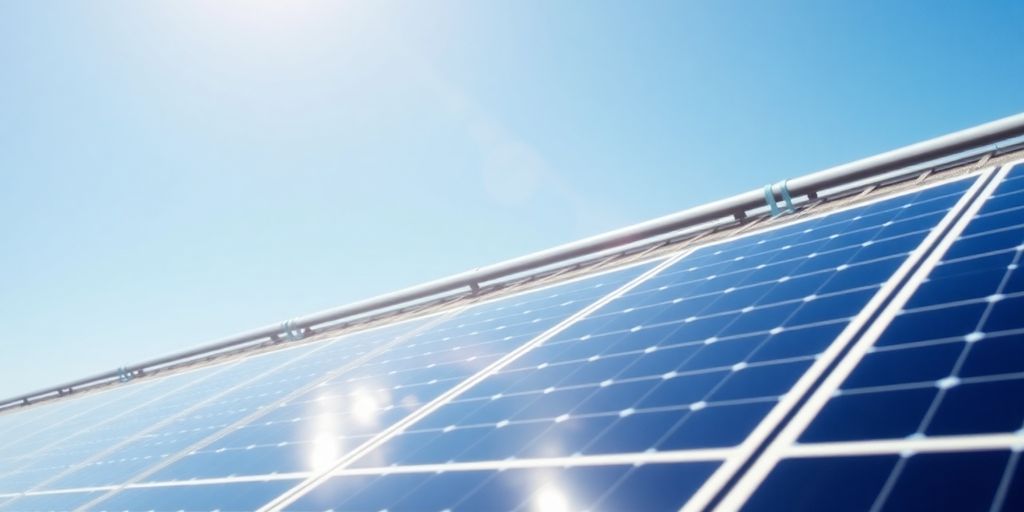
When it comes to solar panels, the choice often boils down to monocrystalline or polycrystalline. Monocrystalline panels are known for their high efficiency because they are made from a single, pure crystal structure. This allows electrons to move more freely, making these panels typically more efficient, often boasting efficiencies between 20% and 23%. On the other hand, polycrystalline panels are made from multiple silicon crystals, which makes them less efficient, generally around 15% to 18%. However, they’re cheaper to produce and generate less waste, which can be appealing for large-scale installations.
Emerging Technologies in Solar Cells
The world of solar technology is buzzing with innovations. One of the most exciting developments is in perovskite solar cells. These are made from a new material that shows promise in achieving high efficiency at a lower cost. In labs, perovskite cells have reached efficiencies over 25%, but challenges remain in terms of durability and large-scale production. Meanwhile, multi-junction cells, which stack different materials to capture a broader range of sunlight, are breaking efficiency records, though they’re not yet practical for everyday use due to high costs. Additionally, concentrated solar power (CSP) technology is being explored for large-scale solar farms, using mirrors to focus sunlight and boost efficiency.
Future Trends in Solar Efficiency
Looking ahead, the future of solar panel efficiency is bright. Researchers are pushing the limits of what’s possible, with some experimental technologies aiming for efficiencies upwards of 50%. There’s a strong focus on improving the stability and scalability of high-efficiency materials like perovskites. We can expect to see more hybrid systems that combine different technologies to maximize energy capture. As production techniques improve, these cutting-edge solutions will become more accessible, further driving the adoption of solar energy.
Factors Influencing the Efficiency of Commercial Solar Panels
Impact of Solar Cell Technology
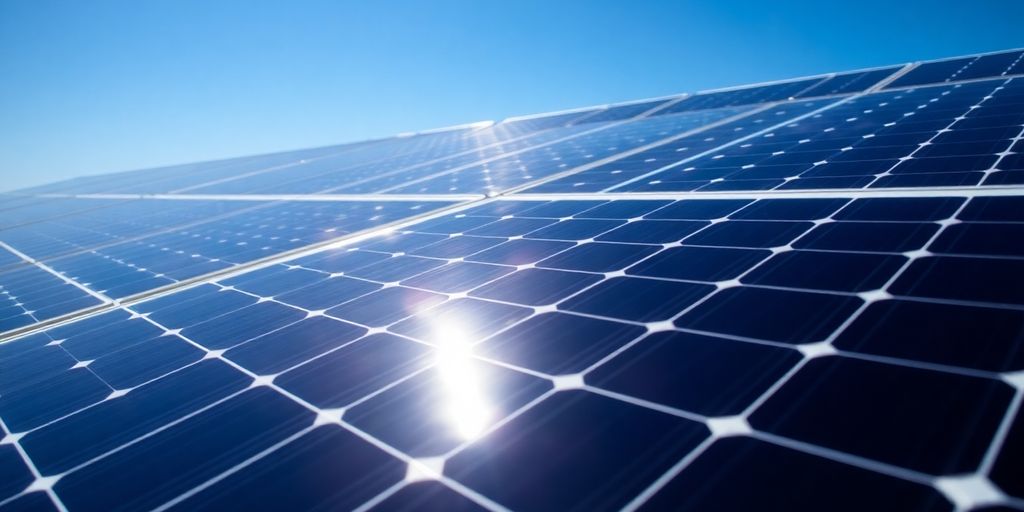
The type of technology used in solar cells is a big deal when it comes to efficiency. Monocrystalline panels are often the top performers, boasting efficiency rates between 16% to 22%. They’re made from a single, pure crystal structure, which helps them convert sunlight into electricity more effectively. On the flip side, polycrystalline panels, while cheaper, offer slightly lower efficiency, usually between 15% to 18%. Thin-film panels, like those using amorphous silicon, are even less efficient but have their perks like being lightweight and flexible.
Role of Material Quality and Design
The materials and design of a solar panel are crucial. High-quality materials and precise manufacturing can make a world of difference. Panels designed with advanced techniques can capture and convert more sunlight, boosting efficiency. It’s not just about what they’re made of but also how they’re put together. The right design can mean more power from the same amount of sunlight.
Effects of Installation and Environmental Conditions
Where and how you install your solar panels can make or break their efficiency. Panels need to be positioned just right to catch the most sunlight. This means considering the climate, the path of the sun, and avoiding any shading from nearby objects. Even the tilt and orientation matter. Plus, panels need to be kept clean and free of obstructions to work at their best. Direct sunlight is key for optimal electricity generation, especially under clear skies.
Getting the most out of commercial solar panels isn’t just about buying the best tech. It’s a mix of choosing the right materials, smart design, and installing them in the perfect spot. All these factors together make sure you’re getting the best bang for your buck.
Maximizing Efficiency in Commercial Solar Installations
Assessing Energy Needs and Budget
Understanding your energy requirements and financial constraints is the first step to maximizing solar panel efficiency. Start by analyzing your current energy usage patterns. Consider peak usage times and overall consumption to determine the right system size. It’s crucial to balance your budget with your energy needs to avoid overspending on a system that exceeds your requirements. Create a list of priorities, such as reducing carbon footprint or cutting energy bills, to guide your decisions.
- Evaluate current energy consumption.
- Determine peak usage periods.
- Align system size with energy goals and budget.
Choosing the Right Manufacturer
Selecting a reliable solar panel manufacturer is vital for ensuring long-term efficiency. Look for manufacturers with a strong track record and positive customer reviews. Consider the efficiency ratings of their panels and the warranties they offer. A manufacturer that offers comprehensive support and a solid warranty can provide peace of mind and protect your investment.
- Research manufacturer reputation and reviews.
- Compare efficiency ratings and warranties.
- Assess customer support and service options.
Importance of Professional Installation
Professional installation is key to achieving optimal efficiency in solar panel systems. Certified installers have the expertise to position panels correctly, ensuring maximum energy capture. They can also advise on the best inverter options to minimize energy loss during conversion. Poor installation can lead to reduced efficiency and higher maintenance costs over time.
- Hire certified and experienced installers.
- Ensure proper panel positioning and alignment.
- Select efficient inverters to reduce energy loss.
Investing in professional installation not only maximizes the efficiency of your solar panels but also extends the lifespan of the entire system. Proper installation ensures that your solar investment pays off in the long run, offering both environmental and financial benefits.
Evaluating the Cost-Effectiveness of Solar Panel Efficiency
Balancing Cost and Efficiency
When deciding on solar panels, it’s not just about picking the most efficient one. Higher efficiency panels often come with a steeper price tag, but they might save you more in the long run. For example, high-efficiency solar panels can be a smart choice if your business is in a place with unpredictable sunlight. Even though they cost more upfront, the savings on your energy bill can make up for it over time.
Long-term Financial Benefits
Switching to solar power isn’t just about being green. It’s also about saving money. Over time, solar panels can cut down your energy costs significantly. Plus, there are often tax incentives and rebates that make the initial investment more appealing. The key is to think about the long haul, not just the upfront costs. As energy prices rise, having a solar setup can be a real financial lifesaver.
Case Studies of Successful Installations
Looking at real-world examples can help you understand the benefits of solar panels. Many businesses have already made the switch and are seeing great results. For instance, some companies have reported cutting their energy costs by more than half after installing solar panels. These success stories can give you a better idea of what to expect and help you decide if solar power is right for your business.
Choosing the right solar panels is about more than just efficiency. It’s about finding the right balance between cost, performance, and long-term savings. Investing in solar power can be a big decision, but with the right information, it can also be a rewarding one.
Understanding Efficiency Ratings and Standards
Standard Test Conditions Explained
When it comes to measuring solar panel efficiency, manufacturers rely on something called Standard Test Conditions (STC). These conditions create a consistent environment to test how well a panel can convert sunlight into electricity. STC includes a temperature of 25°C, solar irradiance of 1000 watts per square meter, and an air mass of 1.5. This setup helps ensure that the efficiency ratings you see on paper are comparable across different products and brands. It’s like having a universal yardstick for solar panels.
Comparing Efficiency Ratings
Efficiency ratings can be a bit of a maze. They usually range from 15% to 23% for commercial solar panels. But what do these numbers really mean? Essentially, they tell you how much sunlight a panel can turn into usable electricity. For instance, a panel with a 20% efficiency rating converts 20% of the sunlight it receives into power. Recent advancements in photovoltaic technology are pushing these numbers higher, making solar panels more effective than ever.
Interpreting Manufacturer Specifications
Looking at manufacturer specifications can sometimes feel like reading a foreign language. They often include terms like "nominal operating cell temperature" and "temperature coefficient." These specs are crucial because they tell you how a panel performs under different conditions. For example, the temperature coefficient indicates how much a panel’s efficiency drops as the temperature rises. Understanding these details can help you make a more informed choice when selecting solar panels for your needs.
Getting the most out of your solar panels isn’t just about picking the ones with the highest efficiency ratings. It’s also about understanding the conditions under which those ratings were achieved and how they apply to your specific situation. This knowledge can make a big difference in maximizing your investment in solar technology.
Overcoming Challenges in Solar Panel Efficiency
Addressing Material and Design Limitations
Solar panels face several challenges, especially when it comes to materials and design. Silicon-based solar panels, which are the most common, have limitations in their ability to convert sunlight into electricity efficiently. This is due to their inability to capture the full spectrum of sunlight. To tackle this, manufacturers are exploring alternative materials like perovskites and multi-junction cells. These materials offer higher efficiency by capturing a broader range of light wavelengths. However, they come with their own set of challenges, such as higher costs and durability issues.
Innovative Solutions and Emerging Technologies
Despite these limitations, researchers and engineers are continuously working to improve solar panel efficiency. Several promising approaches are being developed to push beyond the current limits:
- Perovskite solar cells: These cells are made from a new class of materials called perovskites, which have shown great potential in laboratory settings. Perovskite solar cells have achieved efficiencies over 25%, and they can be combined with silicon in tandem cells to capture more of the solar spectrum. However, stability and durability issues have yet to be fully resolved for large-scale commercial use.
- Multi-junction cells: As mentioned earlier, multi-junction cells layer different semiconductor materials to capture a wider range of light. By combining materials that respond to different wavelengths of light, these cells can exceed the Shockley-Queisser limit. Although currently expensive, advances in production techniques may eventually bring down costs.
- Concentrated solar power (CSP): This technology uses mirrors or lenses to concentrate sunlight onto a small area, allowing for higher energy absorption and increased efficiency. CSP is often used in large-scale solar farms, but the technology is not practical for rooftop installations due to the need for large amounts of space and precise alignment.
Future Prospects for Efficiency Improvements
Looking ahead, the future of solar panel efficiency is promising. As technology advances, we can expect to see new materials and designs that will push efficiency levels higher. The development of emerging technologies and innovative solutions will play a crucial role in overcoming current limitations. While it may take time for these advancements to become widely available, the potential for increased efficiency and cost-effectiveness is significant. This will not only improve the solar panel efficiency standards but also make renewable energy investments more attractive for businesses and consumers alike.
Conclusion
So, there you have it. Commercial solar panels are a big deal for businesses looking to save on energy costs and reduce their carbon footprint. While the efficiency of these panels might not seem sky-high, it’s important to remember that even small improvements can lead to significant energy savings over time. The technology is constantly evolving, and who knows? We might soon see panels that break the 25% efficiency barrier. For now, it’s all about finding the right balance between cost, durability, and efficiency. As solar tech keeps advancing, businesses have a bright future ahead with renewable energy.
Frequently Asked Questions
What does solar panel efficiency mean?
Solar panel efficiency tells us how well the panels change sunlight into electricity. When a panel is efficient, it makes more electricity from the same amount of sunlight.
Why is efficiency important for commercial solar panels?
High efficiency in commercial solar panels means more power, less space needed, and more money saved over time. It helps businesses pick the best panels for their needs.
What factors affect the efficiency of commercial solar panels?
The efficiency of commercial solar panels depends on the technology used, the quality of materials, and the design. Placement, shading, and other environmental factors also play a role.
What are the usual efficiency ranges for commercial solar panels?
Commercial solar panels usually have efficiencies between 15% and 22%. Some newer models can go beyond 22%, and future tech might push it even higher.
How can businesses make the most of their solar panel installations?
Businesses should consider their energy use, budget, and local climate. Picking panels from a trusted brand and getting help from experts can also improve efficiency.
Are solar panels becoming more efficient over time?
Yes, solar panels are getting better with new technologies. While most panels today are around 25% efficient, future advancements might increase this number.