

Many people wonder if solar panels can generate power during the night. The answer is no, as they rely on sunlight to produce electricity. However, there are ways to use solar energy even when the sun goes down. This article will explain how solar panels work, why they don’t function at night, and how homeowners can still benefit from solar energy after dark.
Key Takeaways
- Solar panels only generate electricity during the day when there is sunlight.
- At night, solar panels do not produce power, but homes can still use stored energy.
- Excess energy produced during the day can be stored in batteries for nighttime use.
- Net metering allows homeowners to use credits for the energy they send back to the grid during the day.
- Innovations in solar technology may lead to new ways to harness energy at night.
Understanding Solar Panel Functionality
How Solar Panels Generate Electricity
Solar panels are made up of many small units called solar cells. These cells work by capturing sunlight and turning it into electricity. When sunlight hits the solar cells, it creates a flow of electricity. This process is known as the photovoltaic effect. To power a home, multiple solar panels are connected together to form a solar system.
The Role of Sunlight in Solar Energy
Sunlight is essential for solar panels to work. The energy from the sun travels in tiny packets called photons. When these photons hit the solar cells, they knock electrons loose, creating an electric current. Without sunlight, solar panels cannot produce electricity.
Limitations of Solar Panels at Night
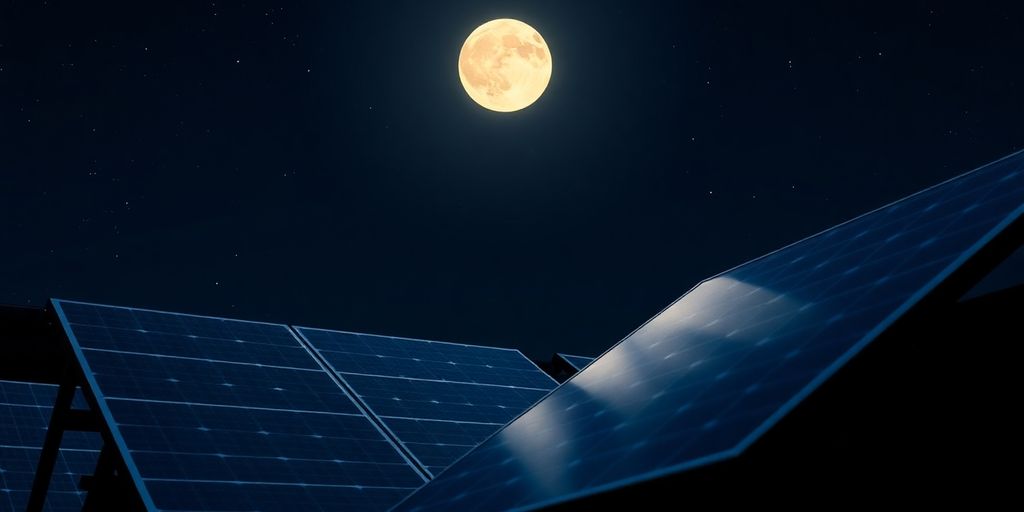
At night, solar panels do not generate electricity because there is no sunlight. While moonlight and artificial lights exist, they are not strong enough to produce usable energy. Here are some key points about solar panels at night:
- Solar panels need direct sunlight to work.
- Moonlight is too weak to generate significant power.
- Artificial lights do not provide enough energy for solar panels to function.
Solar panels are a great way to harness energy during the day, but they rely on sunlight to produce electricity.
The Science Behind Solar Panels and Nighttime

Why Solar Panels Don’t Work at Night
Solar panels rely on sunlight to generate electricity. Without sunlight, solar panels cannot produce power. At night, when the sun is not shining, solar panels are unable to create electricity. However, they can technically generate a tiny amount of power from other light sources, like streetlights or moonlight, but this is not practical for everyday use.
The Impact of Moonlight and Artificial Light
While moonlight can provide some illumination, it is much weaker than sunlight. For example, moonlight can charge solar panels at a rate that is about 350,000 times slower than direct sunlight. Here are some key points about the impact of different light sources:
- Moonlight: Very weak, not enough to power homes.
- Streetlights: Can provide minimal energy, but not sufficient for practical use.
- Artificial Light: Can technically charge panels, but results in energy loss.
Innovative Research on Nighttime Solar Energy
Recent studies have explored ways to harness energy at night. Researchers at Stanford University have developed solar panels that can generate a small amount of electricity at night by using a process called radiative cooling. This method takes advantage of the coldness of outer space. In their experiments, they found that these modified panels could produce about 50 milliwatts of power per square meter at night. While this is an exciting development, it is not yet practical for most homeowners.
The idea of generating electricity at night is still in its early stages, but it shows promise for future solar technology.
How Homes Utilize Solar Energy at Night
The Concept of Solar Battery Storage
Solar battery storage allows homeowners to keep the extra energy produced during the day for use at night. This means you can use solar power even when the sun isn’t shining. Here’s how it works:
- During the day, solar panels generate more electricity than your home needs.
- The extra energy is stored in batteries.
- At night, you can use this stored energy to power your home.
Understanding Net Metering
Net metering is another way homeowners can use solar energy at night. Here’s how it functions:
- When your solar panels produce more energy than you use, the excess is sent back to the grid.
- You earn credits for this extra energy.
- At night, you can use these credits to draw electricity from the grid without extra costs.
Grid-Connected Solar Systems
Homes with grid-connected solar systems can still get power at night. Here’s what happens:
- During the day, solar panels generate energy and send any extra to the grid.
- At night, when solar panels aren’t working, you can draw electricity from the grid.
- This setup allows homeowners to balance their energy use throughout the day and night.
In summary, while solar panels don’t work at night, homeowners can still enjoy solar energy through battery storage and net metering, ensuring they have power when they need it.
Maximizing Solar Energy Use After Dark

Optimizing Solar Systems for Nighttime
To make the most of your solar energy system at night, consider these strategies:
- Choose the right size system: Ensure your solar setup can cover your total yearly energy needs. This way, you can use credits earned during sunny days to offset your nighttime energy use.
- Invest in battery storage: Batteries allow you to store extra energy generated during the day for use at night, giving you more control over your energy costs.
- Use smart home devices: Integrate smart technology like timers and sensors to manage your energy use efficiently.
The Role of Smart Home Devices
Smart home devices can help you maximize your solar energy use after dark by:
- Automating energy use: Set devices to run during the day when solar energy is available.
- Monitoring energy consumption: Track your energy use to make informed decisions.
- Adjusting settings remotely: Control your home’s energy use from anywhere, ensuring efficiency.
Energy-Saving Habits for Solar Users
To further enhance your solar energy efficiency at night, adopt these habits:
- Shift energy-intensive tasks to daytime: Run appliances like dishwashers and washing machines when the sun is shining.
- Be mindful of lighting: Use energy-efficient bulbs and turn off lights when not needed.
- Regularly check your system: Keep your solar panels clean and well-maintained for optimal performance.
By using these strategies, homeowners can effectively utilize solar energy even after the sun goes down, leading to both financial savings and environmental benefits.
Future Innovations in Nighttime Solar Energy

Advancements in Radiative Cooling Technology
Recent studies have shown that solar panels can be modified to generate electricity at night using a process called radiative cooling. This method takes advantage of the coldness of outer space, allowing panels to produce a small amount of energy even when the sun is not shining. Researchers at Stanford have been at the forefront of this innovation, demonstrating that solar panels can harness this unique energy source.
Potential of Thermal Energy Storage
Thermal energy storage is another exciting area of research. This technology allows excess energy generated during the day to be stored and used at night. Here are some key points about thermal energy storage:
- Heat retention: Systems can store heat in materials like molten salt.
- Nighttime energy use: Stored heat can be converted back into electricity when needed.
- Backup power: This method can provide energy during outages or peak demand times.
The Future of Solar Panel Technology
The future of solar technology looks promising with ongoing innovations. Here are some potential developments:
- Improved efficiency: New designs may increase the amount of energy generated at night.
- Wider application: Modified panels could be used in various settings, from homes to businesses.
- Integration with smart devices: Future systems may work seamlessly with smart home technology to optimize energy use.
As researchers continue to explore these advancements, the dream of using solar energy around the clock may soon become a reality.
Financial and Environmental Benefits of Solar Energy
Cost Savings with Solar Energy
Switching to solar energy can lead to significant savings on your electricity bills. Here are some key points:
- Lower monthly bills: Homeowners can save hundreds of dollars each year.
- Tax incentives: Many states offer tax credits for solar panel installation.
- Increased home value: Homes with solar panels often sell for more.
Reducing Carbon Footprint
Using solar energy helps the environment in several ways:
- Less pollution: Solar power reduces reliance on fossil fuels.
- Sustainable energy: It’s a renewable resource that won’t run out.
- Cleaner air: Fewer emissions lead to better air quality.
Long-Term Benefits of Solar Investments
Investing in solar energy has lasting advantages:
- Energy independence: You rely less on the grid.
- Stable energy costs: Protects against rising electricity prices.
- Job creation: The solar industry creates many jobs.
Investing in solar energy not only saves money but also contributes to a healthier planet for future generations.
Conclusion
In summary, solar panels do not produce electricity at night because they need sunlight to work. However, homeowners can still enjoy the benefits of solar energy around the clock. By using battery storage or net metering, they can store extra energy made during the day for use at night. This means that even when the sun goes down, you can still power your home with the energy collected earlier. So, while solar panels may take a break at night, smart energy solutions ensure that your home stays powered and your electricity costs remain low.