

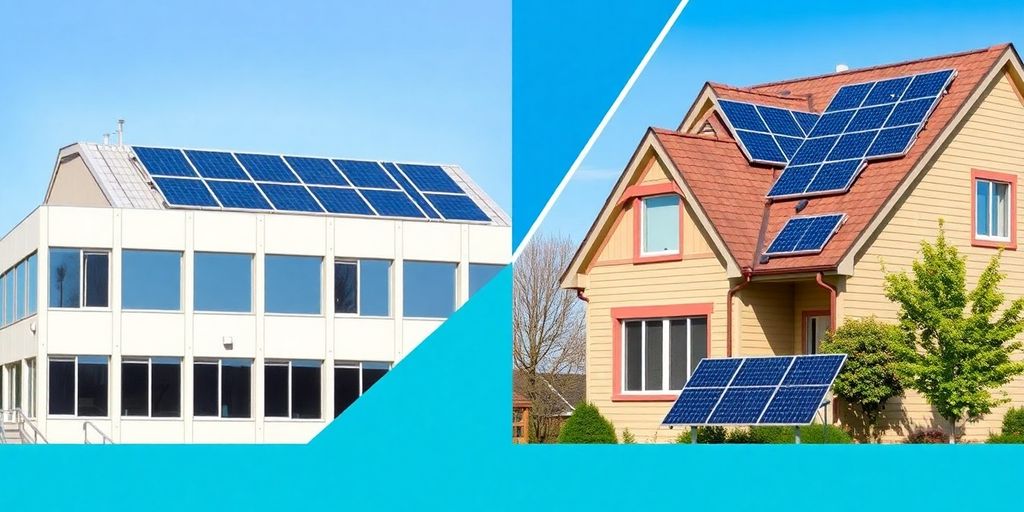
When thinking about solar panels, it’s easy to lump them all together. But commercial and residential solar panels are quite different. Businesses need a lot more power, so their solar setups are bigger and more complicated. Homes, on the other hand, have simpler systems that fit right on the roof. Both options help cut down on electricity bills and are good for the environment. But which one is right for you? Let’s dive into the key differences between commercial and residential solar panels, so you can make the best choice for your energy needs.
Key Takeaways
- Commercial solar panels are larger and generate more power to meet business energy needs, while residential panels are smaller and designed for homes.
- The cost of commercial solar systems is higher, but they offer greater long-term savings due to larger energy outputs.
- Residential solar installations are quicker and less complex compared to commercial setups, which require more planning and space.
- Both types of solar panels contribute to environmental goals by reducing reliance on fossil fuels.
- Financing options vary, with businesses often benefiting from incentives and tax breaks that can offset initial costs.
Understanding the Scale of Commercial and Residential Solar Panels

Differences in Size and Power Output
When it comes to solar panels, size definitely matters. Commercial solar panels are the giants in the solar world. They’re designed to handle the hefty energy needs of businesses, which means they pack a lot of power. Typically, a commercial panel might have around 96 solar cells and measure about 78 inches by 39 inches. On the other hand, residential panels are smaller, usually with 72 cells and dimensions of 65 inches by 39 inches. This size difference isn’t just for show; it means commercial panels can generate more power, which is crucial for keeping businesses running smoothly.
Energy Requirements for Homes and Businesses
The energy needs of a home and a business are worlds apart. Residential solar systems are tailored to meet the energy demands of a household. They cover things like lighting, appliances, and heating or cooling systems. In contrast, commercial systems are built to tackle much larger energy loads. Businesses need to power everything from machinery and equipment to extensive lighting and computing systems. This means that commercial solar setups are engineered to produce significantly more electricity than their residential counterparts.
Rooftop Space Considerations
Space is another big factor when comparing commercial and residential solar panels. Commercial installations often require large, open rooftops or even ground-mounted arrays to accommodate their size and power output. They use complex mounting systems to ensure everything stays in place. Residential panels, however, are designed with the typical home in mind. They fit snugly on rooftops and are often chosen to blend with the home’s aesthetics. Residential setups are generally simpler and quicker to install, given the smaller scale and space constraints.
Installation and Design Complexities
Technical Considerations for Commercial Systems
Commercial solar installations are a whole different ball game compared to residential setups. The scale and intricacy involved mean that detailed design drawings are crucial. These drawings not only outline where panels will go but also ensure everything meets technical and aesthetic standards. Plus, they include permit and construction details, which are essential for a smooth installation process. When you’re dealing with a larger system, there’s a lot more planning involved. Grid connections, shade analysis, and site surveys are just a few of the steps that need thorough attention. And let’s not forget, post-installation inspections are mandatory to ensure everything’s up to code.
Simplified Installation for Residential Panels
On the flip side, residential solar installations are generally quicker and more straightforward. Most of the time, these can be set up in just a day, making them a speedy option for homeowners wanting to switch to solar energy. The process is streamlined because residential systems don’t require the same level of detailed planning or permitting as commercial ones. Homeowners can often enjoy a hassle-free transition with minimal disruptions.
Time and Labor Involved
The time and labor that go into solar installations can vary greatly between commercial and residential projects. Commercial projects can take anywhere from six months to a year, largely due to their size and the complexity of necessary approvals. The actual construction phase might last 6 to 12 weeks, but the entire process, including planning and permitting, is much longer. Residential projects, however, are usually wrapped up in a single day, thanks to their smaller scale and less stringent regulatory requirements.
The journey from planning to powering on solar panels can be an exciting yet demanding process. While residential installations are often quick and efficient, commercial projects require a more measured approach, with numerous steps to ensure everything is in place for a successful energy conversion.
Cost Implications and Financial Returns
Initial Investment and Payback Period
Investing in solar panels is a big decision, whether you’re a homeowner or a business. The initial costs can vary widely. For businesses, commercial solar panels can cost anywhere from $100,000 to over a million dollars, depending on the size and complexity of the installation. This might sound steep, but the payback period for commercial projects can be between 5 to 13 years, thanks to economies of scale and bulk purchasing benefits.
On the flip side, residential solar systems are more budget-friendly, typically costing much less and offering a payback period of about 6 to 10 years. This quicker return on investment makes solar power an attractive option for homeowners looking to cut down their electricity bills.
Long-term Savings and Benefits
The long-term financial benefits of solar panels are hard to ignore. For businesses, commercial systems not only reduce ongoing energy costs but can also boost property values. In some states, the return on investment for commercial solar can exceed 10%, making it a smart financial move compared to traditional investments.
Homeowners, too, can enjoy significant savings. Once the initial investment is recouped, the reduction in electricity bills over the lifespan of the system can lead to substantial savings.
Financing Options for Solar Projects
Financing solar projects can be a hurdle, but there are options available. For businesses, solar Power Purchase Agreements (PPAs) allow them to benefit from solar energy without owning the panels. This can lead to immediate savings on energy costs.
Homeowners have access to various financing options as well, including loans and leases that make the initial investment more manageable. Government incentives and tax credits also play a crucial role in making solar projects more affordable for both residential and commercial sectors.
Investing in solar power is not just about the immediate costs. It’s about understanding the long-term benefits and savings that come with harnessing renewable energy.
Efficiency and Performance Metrics
Energy Production and Efficiency Rates
When it comes to solar panels, efficiency is a big deal. It’s all about how much sunlight a panel can turn into usable electricity. Commercial solar panels usually have a bit of an edge here, boasting about 19.6% efficiency. On the other hand, domestic solar panels typically range from 18% to 24%, with 21% being a sweet spot for most homeowners. This might not sound like a huge difference, but it can add up over time, especially for businesses that need a lot of power.
Durability and Longevity of Panels
Solar panels are built to last. Most panels are designed to keep working efficiently for at least 25 years, which is pretty impressive. They’re tough, able to withstand all sorts of weather, from blazing sun to heavy snow. Warranties often cover 25 to 30 years, giving both homeowners and businesses peace of mind. Over time, panels might lose a bit of their efficiency, but they’re still a solid investment.
Impact on Energy Bills
Switching to solar can really make a dent in your energy bills. For homeowners, this means lower monthly costs and more savings in the long run. Businesses, with their higher energy needs, can see even bigger reductions in their energy expenses. Over time, the savings from using solar power can outweigh the initial costs, making it a smart financial move for many. Plus, there’s something satisfying about generating your own power and watching those bills shrink.
Solar panels are not just about saving money; they’re about investing in a sustainable future. The long-term benefits, both financially and environmentally, make them a compelling choice for anyone looking to reduce their carbon footprint.
Regulatory and Legal Considerations
Permitting and Compliance for Installations
When it comes to solar panel installations, the rules can vary quite a bit depending on whether you’re looking at residential or commercial projects. For homeowners, the focus is mainly on local zoning and building regulations. These ensure that the solar panels fit into the neighborhood’s aesthetic and safety standards. On the flip side, commercial solar projects often face a more tangled web of regulations. They might need to carry out environmental impact assessments, secure land use permissions, and comply with various industrial standards.
Zoning and Space Utilization
Zoning laws play a big role in where and how solar panels can be installed. Residential solar setups usually have to stick to guidelines that maintain the visual harmony of the neighborhood. But for commercial installations, the challenge is often finding enough space. Sometimes, this means considering ground-mounted panels if the rooftop isn’t big enough.
Incentives and Tax Credits
Both residential and commercial solar projects can benefit from various incentives and tax credits, but these can differ significantly. Homeowners might find rebates and credits that make the initial investment more palatable. Businesses, meanwhile, often have access to tax incentives and depreciation benefits that can make a big difference in the financial feasibility of a project.
Understanding the regulatory landscape is crucial for anyone considering solar. While the process might seem daunting, the benefits of solar energy often outweigh the hurdles involved. Just make sure you’re aware of the specific requirements in your area to avoid any surprises.
Environmental and Sustainability Goals
Reducing Carbon Footprint
Switching to solar energy is a significant step towards reducing your carbon footprint. A single solar panel can offset over 100 tons of carbon dioxide emissions throughout its lifespan. That’s a massive contribution when you think about it. Compared to coal, which emits nearly a kilogram of CO2 per kilowatt-hour, solar panels only produce between 20 to 50 grams of CO2e per kilowatt-hour. By choosing solar, you’re not just saving on energy bills, but you’re also making a big impact in fighting climate change.
Supporting Local Power Grids
Solar panels do more than just power your home or business; they support the local power grid too. During peak demand times, solar installations can generate excess energy that feeds back into the grid, helping to stabilize it. This means when you generate more power than you use, it doesn’t go to waste. Instead, it helps keep the grid running smoothly, providing a dual benefit of reducing your own electric bills and supporting community energy needs.
Aligning with Green Initiatives
Adopting solar energy aligns perfectly with broader green initiatives. For businesses, this can enhance your reputation as a sustainability leader, showing your commitment to a cleaner future. For homeowners, it’s about making a personal contribution to environmental sustainability. Both residential and commercial solar systems are part of a larger movement towards renewable energy, helping to conserve natural resources and reduce our reliance on fossil fuels.
Embracing solar power is more than an energy decision; it’s a commitment to a sustainable future. By harnessing the sun’s energy, we not only cut down on emissions but also play a role in promoting a healthier planet.
Wrapping Up: Choosing the Right Solar Panels for You
So, there you have it. Picking between commercial and residential solar panels boils down to what you need them for. If you’re a homeowner, residential panels are usually the way to go. They’re designed to fit on your roof and meet your home’s energy needs without breaking the bank. On the flip side, if you run a business, commercial panels might be worth the investment. They can handle bigger energy demands and might save you more money in the long run, even if they cost more upfront. Either way, going solar is a win for your wallet and the planet. Just make sure to weigh your options and maybe chat with a solar expert to find the best fit for your situation.
Frequently Asked Questions
What are the main differences between commercial and residential solar panels?
Commercial solar panels are larger and produce more power because businesses need more energy. Residential panels are smaller, designed for homes, and are easier to install.
How do the costs of commercial and residential solar panels compare?
Commercial solar panels are more expensive upfront but can save businesses more money over time. Residential panels cost less initially and offer quick savings on home electric bills.
What is the installation process like for commercial solar panels?
Installing commercial solar panels is complex and takes more time because it involves larger systems and more planning. Residential panels are simpler and quicker to install.
Do solar panels help the environment?
Yes, both commercial and residential solar panels help reduce carbon footprints by using renewable energy instead of fossil fuels.
Are there any financial incentives for installing solar panels?
Yes, there are tax credits and incentives for both businesses and homeowners to reduce the cost of installing solar panels.
How long do solar panels last?
Solar panels generally last 25-30 years, providing clean energy throughout their lifespan.